Skip to content
Back to My Paths
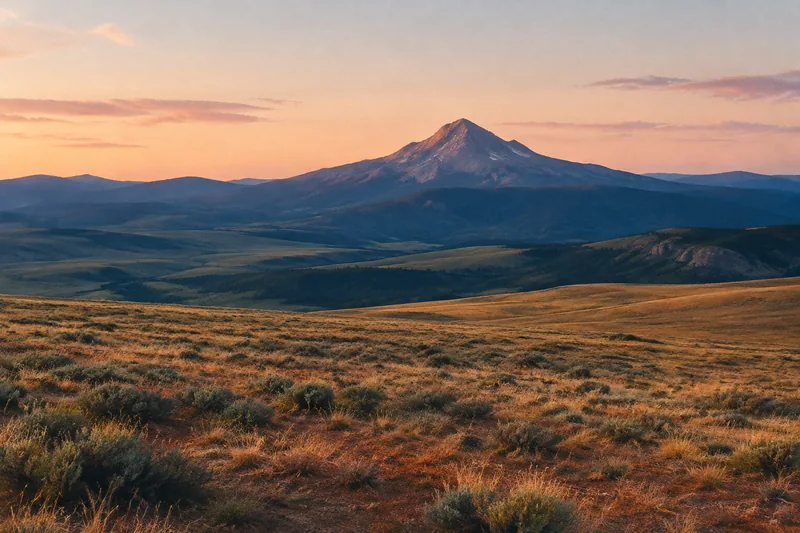
A parent and two children sit with their backs to the camera on a grassy hillside overlooking a golden valley.

A household scenario · illustrative

Keep our beautiful rural property as a family base, sell it, or explore legal tourism use?

Something to think with. Not a recommendation to buy, sell or hold.

You're looking at an example: A household with a rural home. An adult household with a rural, coastal property, weighing whether to keep it, let it legally, use it for family stays or sell. Example · fictional person

The scenario

What it asks for

No address, valuation or balance sheet is needed, and none is asked for. Broad answers are enough, and each one changes what comes first below.

Starting from the example household's answers. Example · illustrative

Rules on letting, water, tax and inheritance are local. Penelope holds no verified rules for any country.

Rules, climate and demand are local. A country or a region is enough.

What the family already gets from it is the starting point.

Distance to shops, care and transport shapes every option.

A supply that fails in a dry year limits family use and letting alike.

Two of the four options depend on a permission you may not have.

Heat, fire, flood and storms affect safety, insurance and cost.

What the house is for decides which of the other answers matter.

Still open: water and energy, permitted uses, climate exposure.

Four ways forward

Compared in words, never ranked

Four ways forward, compared in words on what they give the family and what they ask of it.

A valid outcome

Keeping the house simply because your family loves being there is a complete answer. It does not need a rental return to justify it.

Each way forward

Keep it as a family base

The house stays what it is: the place the family gathers. It earns nothing and asks to be paid for.

Example · illustrative
Strength
Keeps the place the family gathers. That value is real even though no market measures it.
Trade-off
Every cost is yours, with no income against it. The stress test shows which lines matter most.
Unknown
If the area loses residents and services, daily life there may get harder. If it stays sought after, the reverse. Not known.

From your answers

  • A dry year or a long outage would limit family stays.
  • A long drive makes short visits harder. How often would the family really go?
All eight criteria, lifestyle beside money

Family and lifestyle

  • Family benefitStrengthKeeps the place the family gathers. That value is real even though no market measures it.
  • DemographicsUnknownIf the area loses residents and services, daily life there may get harder. If it stays sought after, the reverse. Not known.

Money, rules and demand

  • Carrying costsTrade-offEvery cost is yours, with no income against it. The stress test shows which lines matter most.
  • LiquidityTrade-offYour money stays tied up in one place. Selling later is possible but may be slow.
  • Regulatory riskStrengthOwner use depends on the fewest permissions. Local rules can still change.
  • Tourism demandStrengthNothing here relies on visitors.

Place and climate

  • Water and energyUnknownReliability in a dry year or a long outage has not been checked.
  • Climate exposureUnknownExposure to wildfire, flood or the coast, and what insurance would cover, have not been supplied.

Verify first

  • That the carrying costs are affordable in a bad year, not only an average one.
  • What your insurance covers.

Can it be undone? Fully reversible. You can let or sell later if circumstances change.
Legal tourism use

Let the house to visitors for part of the year, where and only where that is lawful. Income, in exchange for sharing the place and running it.

Example · illustrative
Strength
Income that can help the family keep the house.
Trade-off
Income can help keep the house, at the price of sharing it: let weeks are weeks the family is not there.
Unknown
Tourism can hold up where the resident population falls, or follow it down.

From your answers

  • Cannot be counted on until the permitted use is confirmed in writing.
  • A supply that fails would fall on paying guests.
  • Guests without a car may find it hard to reach.
All eight criteria, lifestyle beside money

Family and lifestyle

  • Family benefitTrade-offIncome can help keep the house, at the price of sharing it: let weeks are weeks the family is not there.
  • DemographicsUnknownTourism can hold up where the resident population falls, or follow it down.

Money, rules and demand

  • Carrying costsUnknownLetting adds income and adds costs: cleaning, management, wear, insurance. The balance is not known and is not forecast here.
  • LiquidityUnknownA lawful letting history may help or hinder a later sale. It depends on local rules and on buyers.
  • Regulatory riskTrade-offDepends on a licence or permission you may not have, under a rule that can change. Verify this before anything else.
  • Tourism demandUnknownDemand may be there in some years and not in others, and more hosts entering the market affects rates.

Place and climate

  • Water and energyTrade-offGuests raise demand for water and power in the months when supply is tightest.
  • Climate exposureTrade-offA heatwave, a fire season or a storm can cancel a season's bookings as well as damage the house.

Verify first

  • What use is lawful for this property today.
  • Whether a proposal that would change that is under consultation, and what stage it has reached.
  • That insurance covers paying guests.
  • That water and power can serve more people in the driest month.

Can it be undone? Reversible in principle: you can stop letting. Money spent preparing the house for guests is not recovered.

Long-term rental

Let the house to someone who lives there all year. Steadier than tourist letting, and the family gives up its own use for the length of the tenancy.

Example · illustrative
Strength
Regular rent can cover part of the carrying costs with less seasonal swing. How much is not forecast here.
Trade-off
A tenant gives the house a life and an income, and takes away the family's use of it for the length of the tenancy.
Unknown
Needs local people who want to rent there all year. Whether they exist depends on jobs, services and who is moving in or out.

From your answers

  • Letting long term may need a permission too. Confirm it before counting on any income.
  • A supply that fails would fall on someone who lives there.
All eight criteria, lifestyle beside money

Family and lifestyle

  • Family benefitTrade-offA tenant gives the house a life and an income, and takes away the family's use of it for the length of the tenancy.
  • DemographicsUnknownNeeds local people who want to rent there all year. Whether they exist depends on jobs, services and who is moving in or out.

Money, rules and demand

  • Carrying costsStrengthRegular rent can cover part of the carrying costs with less seasonal swing. How much is not forecast here.
  • LiquidityTrade-offA sitting tenant can make a sale slower.
  • Regulatory riskTrade-offTenancy law protects tenants in ways that limit when you can take the house back. Rules vary by place: verify them.
  • Tourism demandStrengthDoes not depend on visitors.

Place and climate

  • Water and energyUnknownA household living there all year needs supply all year. Whether the house has it has not been supplied.
  • Climate exposureUnknownThe same exposure as owner use, with a landlord's duties added.

Verify first

  • What tenancy law requires of a landlord locally, and how a tenancy can end.
  • That water, power and heating are reliable in winter as well as summer.

Can it be undone? Reversible, but slowly: a tenancy runs its course before the family can use the house again.

Sell

Turn the house into money the family can use elsewhere. The costs and the risks end, and so does the place.

Example · illustrative
Strength
Removes them.
Trade-off
Ends the family's use of the place. For some families that is the largest cost on the list.
Unknown
Fewer residents may mean fewer buyers. A sought-after place may attract them. Not known.
All eight criteria, lifestyle beside money

Family and lifestyle

  • Family benefitTrade-offEnds the family's use of the place. For some families that is the largest cost on the list.
  • DemographicsUnknownFewer residents may mean fewer buyers. A sought-after place may attract them. Not known.

Money, rules and demand

  • Carrying costsStrengthRemoves them.
  • LiquidityStrengthTurns the house into money you can use elsewhere. What it would fetch, and how quickly, is not known.
  • Regulatory riskStrengthLeaves future rule changes to someone else. The sale itself has legal and tax steps to verify.
  • Tourism demandUnknownWhether buyers value the letting potential depends on the same rules you would face.

Place and climate

  • Water and energyStrengthNo longer your concern after a sale. It may affect what a buyer will pay.
  • Climate exposureStrengthRemoves your exposure. It may already be reflected in what buyers offer.

Verify first

  • The legal and tax steps of a sale, with a qualified professional.
  • What everyone in the family would miss, before the decision and not after it.

Can it be undone? Not reversible. Once sold, the place is gone from the family.

Across worlds

How each way forward might fare

Nobody knows what tourism, construction costs or property prices will do. Each option is read across several worlds, including one where AI changes little.

Conditional thought experiment, not a forecast. No world is given a likelihood. Example · illustrative

Worlds in this comparison

Scenario, not a forecast

Three or four contrasting worlds. Each is a conditional thought experiment, not a forecast, and at least one is always a world in which AI does not accelerate.

  • Thought experiment, not a forecast

    Broad prosperity from AI

    Leisure and travel may grow, but so may the supply of tourist accommodation.

    Why it might not happen: Each of the three assumptions is uncertain, and they do not have to arrive together.

  • Thought experiment, not a forecast · AI does not accelerate here

    AI technical plateau

    A less-AI future: ordinary household incomes, financing, tourism demand and the fundamentals of the place dominate.

    Why it might not happen: Bottlenecks can be overcome in ways few expect. A plateau may be brief.

  • Thought experiment, not a forecast · AI does not accelerate here

    A future where AI is not the main story

    Local forces lead: tourist-let and environmental rules tighten, and some rural places lose residents while the most desirable stay scarce.

    Why it might not happen: AI could turn out to matter more than this world supposes.

  • Thought experiment, not a forecast · AI does not accelerate here

    Physical-world bottlenecks

    Water, energy, insurance and wildfire exposure become the binding limits locally, whatever software can do.

    Why it might not happen: Efficiency can improve and new supply can be built. A bottleneck may ease.

Compare across worlds

Scenario, not a forecast

How each option might fare if a world held, in words. There are no scores and no likelihoods here, because nobody knows which world will come, and they are not mutually exclusive.

World 1 of 4

Broad prosperity from AI

Keep it as a family base

Strength

More leisure time would mean a family base gets used more, not less.

Legal tourism use

Trade-off

More travellers, and more hosts competing for them. Rates need not rise.

Long-term rental

Unknown

If more people can work from anywhere, more might want to live there all year. That is a possibility, not a trend Penelope can show.

Sell

Unknown

If cheaper construction increases demand for land, prices in scarce locations may not fall. Or buyers may have more alternatives. Open.

Leave things as they are this yearThe do-nothing alternative

Strength

Nothing forces a decision, and waiting keeps every option.

World 2 of 4

AI technical plateau

AI does not accelerate here
Keep it as a family base

Strength

Nothing about a slower-AI world weakens the case for a place the family loves and can afford.

Legal tourism use

Unknown

Demand follows ordinary incomes and the place itself. Neither is forecast here.

Long-term rental

Strength

A steady tenancy is the option least dependent on any technology story.

Sell

Strength

Ordinary financing conditions decide the sale. Nothing here argues for hurrying or for waiting.

Leave things as they are this yearThe do-nothing alternative

Strength

The cheapest way to learn more: spend time there and keep a note of what it costs and gives.

World 3 of 4

A future where AI is not the main story

AI does not accelerate here
Keep it as a family base

Unknown

If services thin out as residents leave, the house may be harder to live in. If the place stays sought after, it keeps its appeal.

Legal tourism use

Trade-off

Tighter licensing or environmental rules could reduce or end lawful letting. This option is the most exposed to a rule change.

Long-term rental

Unknown

Depends on whether local people still want to rent there as the population changes.

Sell

Trade-off

In a place losing residents there may be fewer buyers later. In a scarce one, selling gives up something hard to replace.

Leave things as they are this yearThe do-nothing alternative

Trade-off

If the tourist-let rule moves from proposal to adopted, the choice may narrow without you.

World 4 of 4

Physical-world bottlenecks

AI does not accelerate here
Keep it as a family base

Trade-off

Water, power and insurance costs fall on you alone. The stress test shows how far they can rise before it strains.

Legal tourism use

Trade-off

Guests need water and power exactly when they are scarcest, and a fire season can empty the calendar.

Long-term rental

Trade-off

A landlord has to keep water and power reliable all year, in the hardest months too.

Sell

Trade-off

Exposure to water or fire risk may already weigh on what buyers offer.

Leave things as they are this yearThe do-nothing alternative

Trade-off

Unchecked water, insurance or fire exposure does not improve by being left.

What holds across worlds

  • The house gives the family something that no return measures.
  • Lawful use has to be verified before it is counted on.
  • Carrying costs need to be affordable in a bad year, not only an average one.
  • Water, energy and insurance matter in every world compared here.

No-regrets action

Stress-test carrying costs, water and insurance; verify lawful uses; consider personal enjoyment and flexible occupancy, rather than relying on a single appreciation or tourism thesis.

Worth doing in several of these worlds, and it can be undone. It is a suggestion to weigh, not a verdict on the options above.

What changes from world to world

  • How much tourist demand there is, and how many other hosts compete for it.
  • How tight the rules on letting become.
  • How easy the house would be to sell, and to whom.

A robust action

Stress-test carrying costs, water and insurance; verify lawful uses; consider personal enjoyment and flexible occupancy, rather than relying on a single appreciation or tourism thesis.

  1. Stress-test the carrying costs, water and insurance.
  2. Verify which uses are lawful.
  3. Weigh the family's own enjoyment, and ways of using the house flexibly.
  4. Do not rest the decision on one view of prices or of tourism.

Rules and scenarios

Verified rules, kept apart from illustrations

Nothing here is a verified local rule. Every rule, cost and level of demand is illustrative until you confirm it for your own property.

Verified local rules

There is no verified source for this

This is about the local rules for this property. Penelope could not tie this to a source it can show you.

So Penelope is not suggesting an action here.

How to check

No country has been chosen, so Penelope shows no rule, no estimate and no figure that depends on one. Choose the country above, then check with:

  • The town hall or local planning office, for permitted uses and any letting licence.
  • The land or property registry, for title and boundaries.
  • The national tax authority's own website, for current rules and their effective dates.
  • The water authority, for supply and wastewater.

Illustrative scenarios

Scenario, not a forecastA what-if constructed by Penelope to test a choice. It is not a prediction.

Everything else on this page is a way to think, not a fact about any place:

  • The readings of the four ways forward.
  • The worlds, and how each option might fare in them.
  • The carrying-cost stress test, which adds up hypothetical figures.
  • What others might do, and the pre-mortem.

None of it becomes a rule by being repeated. Where a step depends on a rule, it says “verify first”.

Illustrative: hypothetical round numbers

Carrying-cost stress test

It adds up the numbers you enter, with and without the stresses you choose, and compares the total with the amount you said you could carry.

Jurisdiction
Not chosen
Source of any rule
Not verified — illustrative
Effective date
Not verified — illustrative
Money
Constant: today's prices throughout, nothing inflated

Every number can be changed. The starting figures are round and hypothetical. They are not estimates for any property. A unit is whatever suits you: a hundred or a thousand of your own currency. Only the proportions matter here. Example · illustrative figure

Yearly costs

Routine maintenance in an ordinary year. In units a year; 0 to 1000.

Buildings and contents. Check what cover you actually have for fire, flood and storm. In units a year; 0 to 1000.

Standing charges and use, including while the house is empty. In units a year; 0 to 1000.

Take this from your own bills. Penelope does not work out what you owe. In units a year; 0 to 1000.

What it costs the family to get there in a year. In units a year; 0 to 1000.

A roof, a pump, the drains: something large arrives eventually. In units a year; 0 to 1000.

Income, only if lawful

Leave this at zero unless a lawful use has been confirmed. It is your assumption, not a forecast. In units a year; 0 to 1000.

Your own limit

Your own figure. The illustration compares the totals with it and has no view on whether it is right. In units a year; 0 to 5000.

Stresses to try
What if cover for fire, flood or storm costs twice as much?
What if water and energy cost twice as much for a year?
What if three times the amount set aside is needed this year?
What if every cost line is a quarter higher?
What if a rule change, a poor season or a problem with the house means no letting income at all?
Illustrative yearly figures, in units, constant money
LineAs enteredWith stresses
Upkeep and repairs30 units30 units
Insurance10 units10 units
Water and energy10 units10 units
Other fixed charges10 units10 units
Travel to and from the house5 units5 units
Set aside for a big repair15 units15 units
Income from lawful letting (income)0 units0 units
Cost after any income80 units80 units
What you said you could carry100 units

With the numbers you entered, the yearly cost after any income stays within the amount you said you could carry.

No stress chosen yet. Pick one or more to see how the yearly cost would move.

It is not a valuation, a forecast of income, a tax calculation or advice about what to do with the house.

Left out on purpose

  • Tax of any kind. Rules vary by place and by person, so Penelope does not calculate it.
  • Mortgage or loan payments. Add them to 'Other fixed charges' if you have them.
  • Any change in what the property might sell for.

Before anything is decided

Check before acting

The professional checks for a decision like this. Your answers above decide which come first.

  • Moved up: You said the permitted uses are not confirmed in writing.
  • Moved up: Rules on letting can be under consultation; worth asking alongside.
  • Moved up: You said the water and energy supply is not known to be reliable.
  • Moved up: A long outage matters for family stays and for guests.
  • Moved up: Climate exposure has not been checked as low, so cover matters.

Check before acting

What to verify with a professional

Each of these is worth confirming with someone qualified before you commit to anything. Penelope cannot verify any of them for you.

  • Ask the town hall or the local planning office. Ask about tourist letting and long-term letting separately. Different rules may apply.
  • Ask the local planning office. A proposal is not law. Ask what stage it has reached and when it could take effect.
  • Ask the water authority or a qualified surveyor.
  • Ask a qualified electrician.
  • Ask your insurer or a broker.
  • Ask a property solicitor or notary.
  • Ask a building surveyor.
  • Ask a qualified tax adviser. Rules vary by country and by personal circumstances. Penelope does not calculate tax.
  • Ask your lender.
  • Ask an estate lawyer or notary. Ownership and inheritance rules depend on where you live and where the house is.

Penelope cannot do these checks for you, and ticking a box here is only a note to yourself.

Where the official information is

  • The town hall or local planning office, for permitted uses and any letting licence.
  • The land or property registry, for title and boundaries.
  • The national tax authority's own website, for current rules and their effective dates.
  • The water authority, for supply and wastewater.

Penelope links only to sources it has checked, so these are pointers, not links.

Education only

Inheritance and wealth: the ideas, and what to ask

If the house is meant to stay in the family, these are the concepts worth understanding first. Penelope calculates nothing here: without a country, an effective date and your own circumstances, any figure would be a guess.

  • Which country's rules

    The rules that apply can depend on where the property is, where its owner lived and where the heirs live. Sometimes more than one country is involved.

  • Who inherits

    Some countries reserve part of an estate for close family, whatever a will says. Others leave more to the will itself.

  • Thresholds and allowances

    Many systems tax less, or nothing, below certain amounts or for certain relatives. The figures differ by country and change over time. Penelope holds none of them.

  • Gifts during life

    Giving a share of a house during life can be treated differently from leaving it in a will, and the timing can matter.

  • How it is owned

    A house can be owned jointly, in shares or through other arrangements, each with different consequences for passing it on or selling it.

  • Announced is not in force

    A rule that has been proposed or announced is not yet law. Every rule worth relying on has a source and an effective date.

Questions to take to an estate lawyer, a notary or a tax adviser

  1. Which country's rules apply to this house, and to each of us?
  2. What would happen if nothing were planned at all?
  3. How would a gift now differ from an inheritance later, for us?
  4. How should the house be owned if more than one of us is to share it?
  5. Which rules are in force, which are only proposed, and from what date?
  6. What would it cost to get this advice, and what documents should we bring?

Still unknown

  • Lawful use

    What is the property permitted to be used for today?

    How to find out: Ask for the permission in writing. Who can confirm: The town hall or the local planning office

  • Water in a dry year

    Has the supply ever run low, and would it serve more people?

    How to find out: Ask neighbours and the water authority, and have the system checked. Who can confirm: The water authority or a qualified surveyor

  • Insurance cover

    What is covered, what is excluded, and is cover still offered for the area?

    How to find out: Read the policy schedule and ask the insurer directly. Who can confirm: Your insurer or a broker

  • Real yearly costs

    What did the house actually cost over the last full year?

    How to find out: Gather a year of bills in one place. Who can confirm: Your own records

  • What the family wants

    What would each person miss, and what would each prefer?

    How to find out: Ask them, one at a time, before any option is favoured. Who can confirm: The family

Small, reversible experiments

Each one teaches something and commits you to nothing.

  • Spend two off-season weeks at the house and note what it costs and gives

    The off-season shows the house as it is: the heating, the road, the quiet. It costs little and commits you to nothing.

  • Gather a year of real bills in one place

    The stress test is only as good as its numbers. Real ones replace the hypothetical defaults.

  • Ask each person what the house is for

    Family value is the one criterion only the family can fill in, and people often answer differently.

Optional

What might others do?

Conditional reactions, not predictions: what other owners, builders or governments might do, what could follow, and why it would matter to the house. They may not react at all.

A gentle pre-mortem

Imagine it is a few years from now and this has gone poorly. Not ruinously: just not as you hoped. What is the most likely reason?

  • “We let the house and found the use was not lawful.”

    An early sign: Nobody can show the permission in writing.

  • “The costs rose faster than we expected, and the house became a worry.”

    An early sign: A repair is put off for a second year.

  • “We sold, and the family missed it more than we had imagined.”

    An early sign: The plan to sell is avoided at family meals.

  • “A dry summer left the house short of water while someone else was living in it.”

    An early sign: The supply has already run low once.

Guards worth keeping

None picked. If one of the stories above feels possible, pick it and its small guard appears here.

A pre-mortem is a way to find one or two guards. It is not a list of things to fear. If it stops being useful, leave it.

What would change your mind?

Name one specific thing that would make you look at this again. Deciding it now, calmly, is easier than deciding it when the news arrives.

You said you would look again if

  • If the tourist-let rule moves from proposal to adopted, we'll re-check the letting scenario.Example · trigger
  • If water, insurance or upkeep costs change materially, we'll stress-test the carrying costs again.Look again on 1 March 2027, whatever happens.Example · trigger

Examples to start from

One observation you could actually notice. Not a date for the world, and not a number.

A date to come back to this whatever happens.